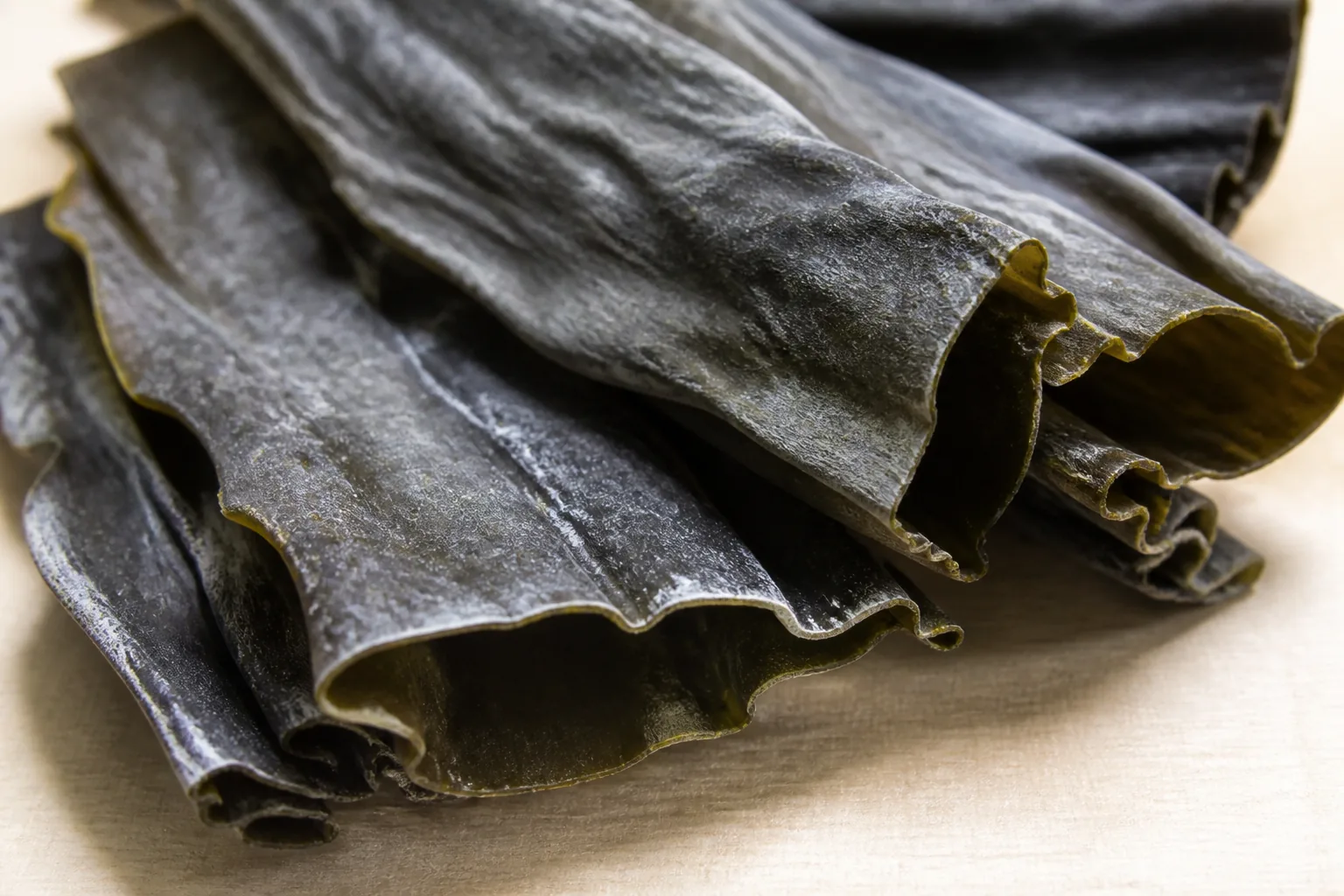
There is a particular fullness that separates a really good pot of soup from a thin one, and it is not always about meat, salt or long hours on the stove. Cooks reach for all sorts of things to build it — a rind of cheese, a splash of soy, a slow-browned onion — and one of the quietest and most reliable is a single strip of kombu, the thick dried kelp sold in flat leathery pieces. Dropped into water, it releases a deep, rounded, savory taste that makes broths and simmered dishes feel more complete without announcing itself as seaweed at all. Most people who eat kombu-flavoured stock never guess there was seaweed involved; they just notice the food tastes fuller. That background savoriness is the whole point of keeping kombu, and using it well comes down to a couple of easy rules and one thing you must not do. This guide covers both.
What kombu actually does
Kombu is naturally rich in the compounds that give food a savory, mouth-filling quality — the same broad family of flavours you meet in ripe tomatoes, aged cheese and mushrooms. When you steep or gently heat a piece of kombu in water, those compounds dissolve into the liquid and lend it a soft depth that has no single obvious flavour of its own. It does not taste fishy or strongly of the sea; it tastes, more than anything, like more. That is why kombu is the backbone of so many simple broths: it does the heavy lifting of savoriness so that a handful of other ingredients can shine.
Because the effect is a background one, kombu plays well with almost anything you simmer in water. A pot of dried beans, a vegetable soup, a pan of rice, a braise — drop in a strip and the finished dish gains a rounder, more satisfying base note.
The one rule: keep it gentle
Here is the thing you must not do: do not let kombu boil hard for a long time. When kelp is boiled aggressively, it starts to give off a slippery texture and can turn the liquid faintly bitter and overly strong. The savoriness you want comes out best at a gentle temperature, well below a rolling boil.
The classic approach is simple. Put the strip of kombu in cold water and let it sit for a while — twenty minutes to an hour if you have time, longer in the fridge is fine. Then warm the water slowly. Just as it approaches a simmer, before it truly boils, lift the kombu out. You have extracted the good flavour without the slippery, bitter edge. If you are adding kombu to a pot that will simmer for a long time anyway, such as a bean pot, use a modest piece and know that its texture will soften into the background rather than staying a distinct vegetable.
A basic kombu broth
The simplest use is a plain kelp broth you can build anything on. Take a piece of kombu roughly the size of a postcard and a litre of water. Soak the kombu in the cold water for at least twenty minutes. Set the pot over low to medium heat and bring it up slowly. Watch for the first small bubbles at the edge, and just before it simmers, take the kombu out. What is left is a clear, gently savory liquid — a foundation for miso soup, a base for cooking noodles, or the start of a vegetable soup that needs no other stock.
From there you can layer. Some cooks add a second savory element after the kombu comes out — dried mushrooms are a natural partner, deepening the broth further. Others simply season the kombu water with a little soy and use it as is. The kelp has already done its job.
Beyond broth
Kombu is not only for liquids you strain. Tuck a small piece into the pot when you cook dried beans or lentils and it lends them a savory backbone as they soften; many cooks find it makes a pot of plain beans taste seasoned before you have added anything else. Drop a strip into the water for a pot of rice, remove it before serving, and the grains carry a faint, pleasant depth. A used piece of kombu, having given its flavour to a broth, need not be thrown away either — sliced thin, it can be simmered briefly with a little soy into a small savory side. Once you stop thinking of kombu as an exotic ingredient and start treating it as a savory tool, a single packet quietly improves a great deal of ordinary cooking.