Buying
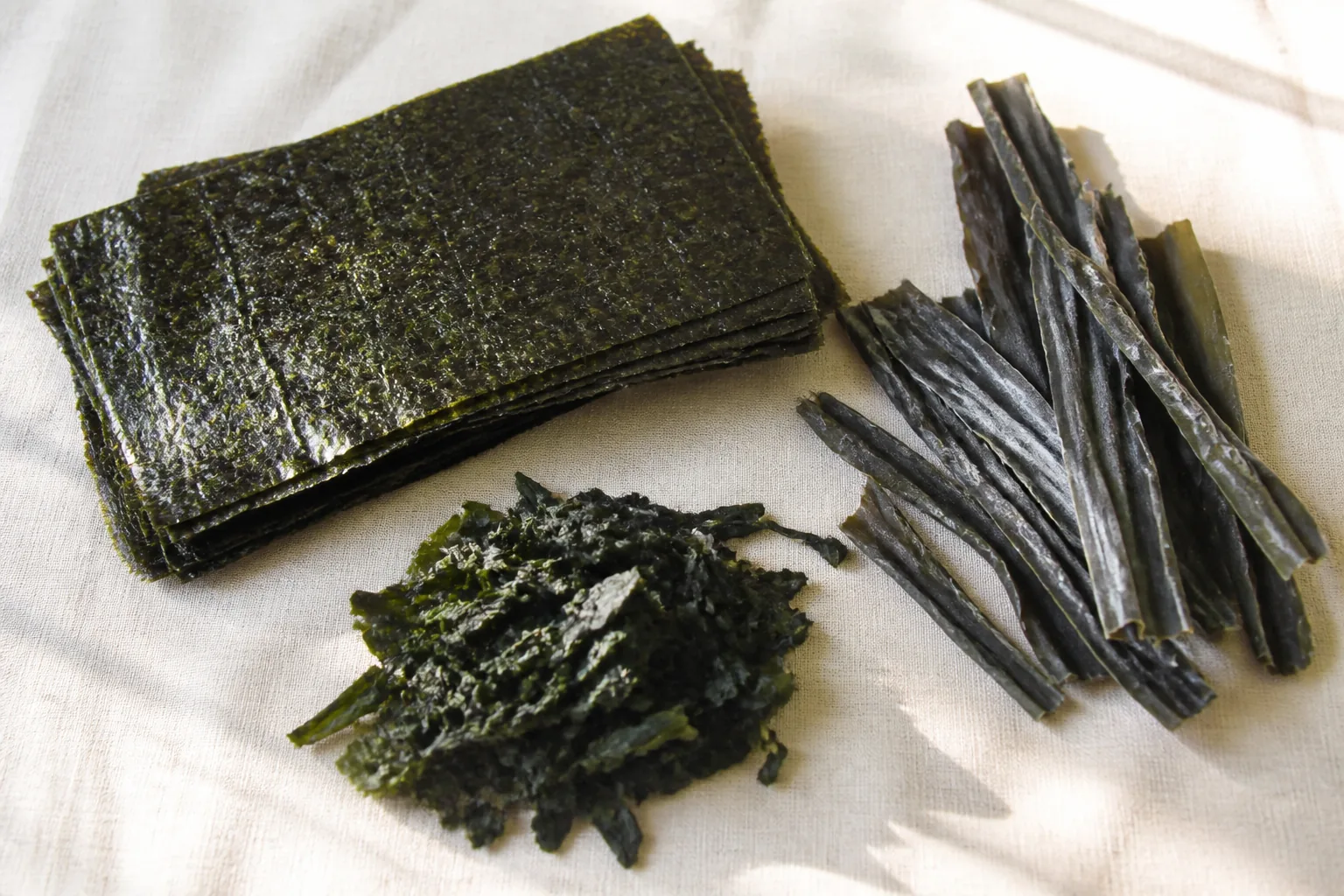
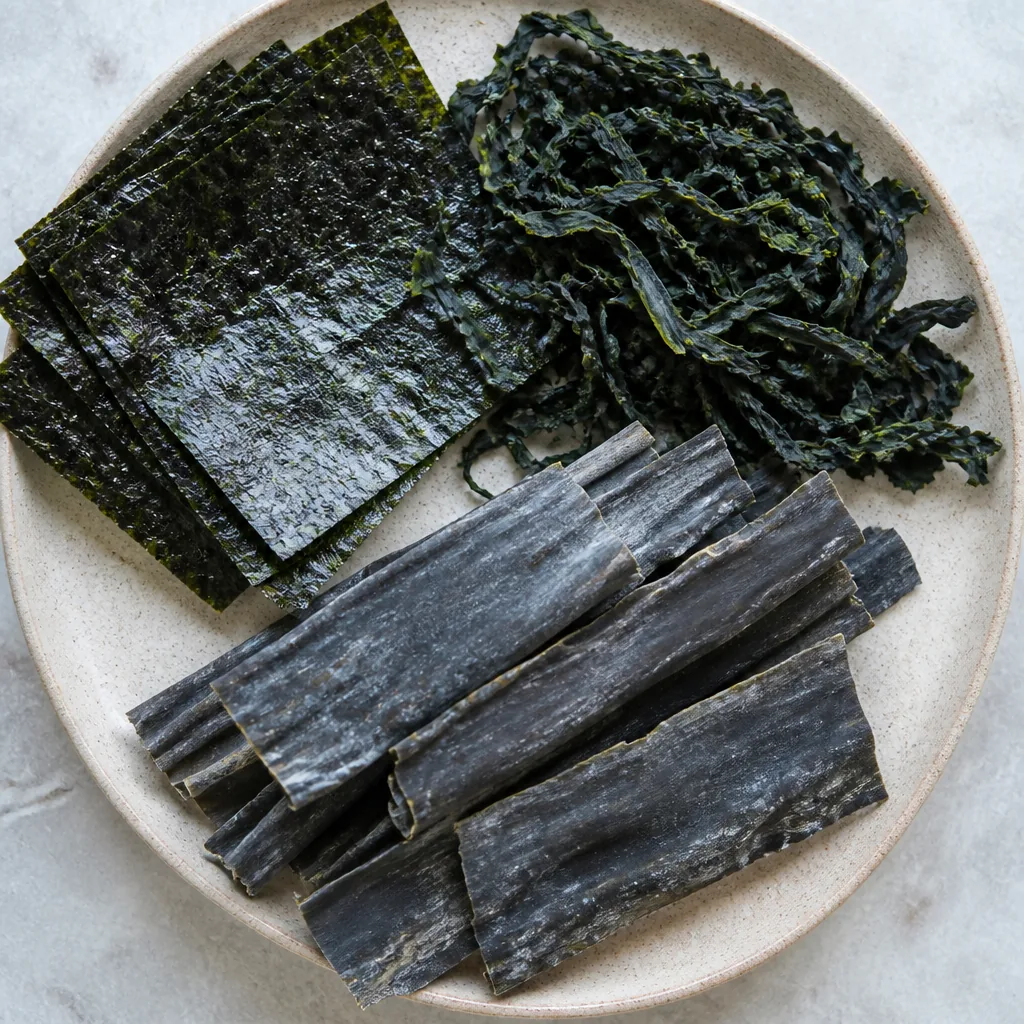
A starter set of seaweeds
The four or five dried sea vegetables worth keeping first, what each one tastes like, and how to spot them on a crowded shop shelf.
Read the guideNori, wakame, kombu and a few of their cousins keep for months in a jar and add a quiet, savory, mineral note to food you already cook. This is a plain guide to buying them, softening them, and using them without any fuss.
Seaweed can feel like a specialist ingredient — something that belongs to sushi bars and nowhere else. It does not. A few packets of dried sea vegetables are among the most patient things you can keep in a kitchen: light, long-lasting, and quietly useful in dishes that have nothing to do with a sushi roll. The Sea Vegetable is written to make that shelf approachable.
Everything here sticks to the everyday. How to tell nori from wakame at the shop, how much a strip of kombu really does for a pot of stock, why a handful of dried wakame swells into a bowlful, and how to keep the whole lot from turning soft in a damp cupboard. No special gear, no long shopping lists — a jar, a bowl of water, and a bit of curiosity.
Start with the starter set if seaweed is new to you, or jump straight to the technique you need. Each piece stands on its own.
The four or five dried sea vegetables worth keeping first, what each one tastes like, and how to spot them on a crowded shop shelf.
Read the guide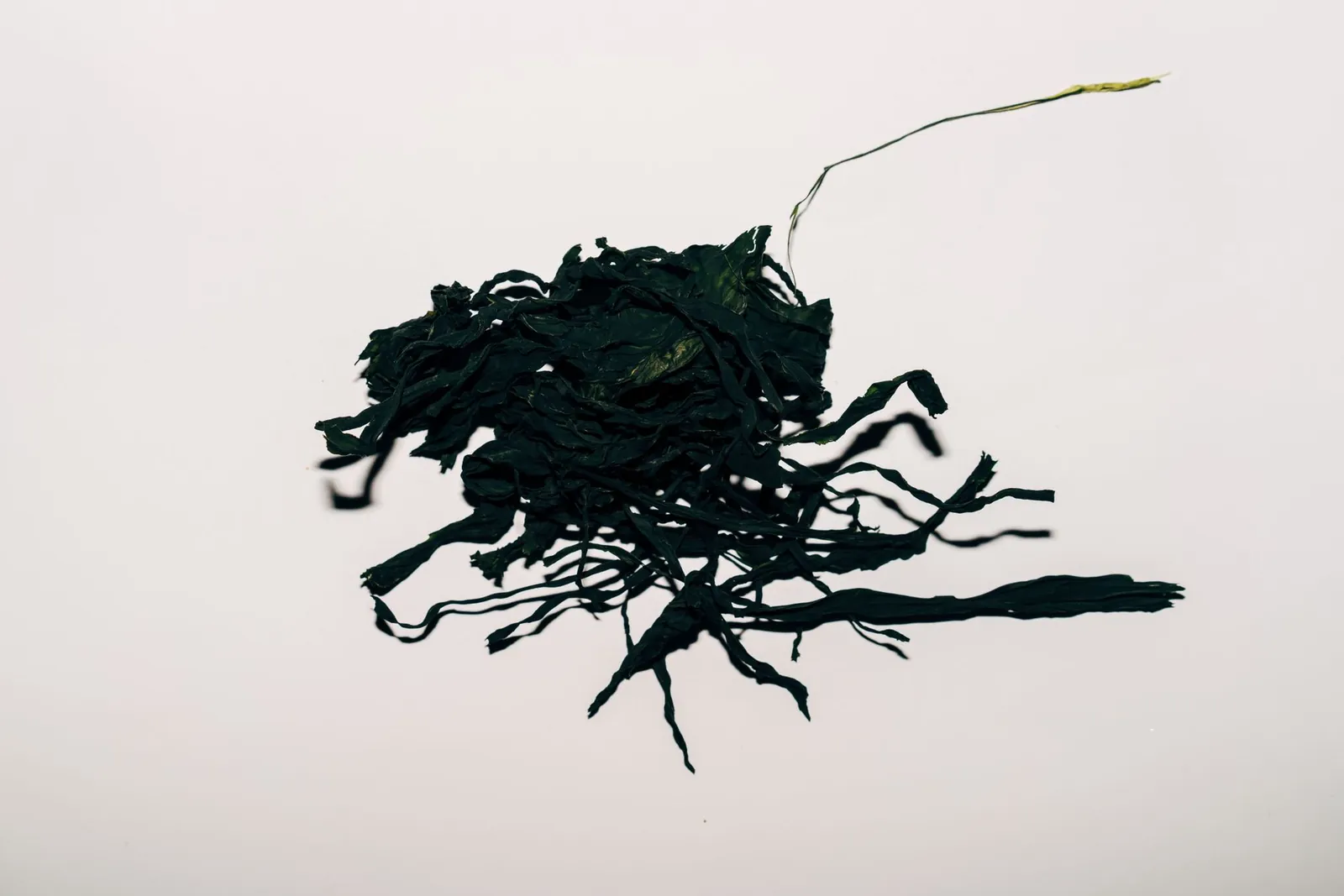
How much water, how long, and how much a dry pinch expands — the plain mechanics of turning a crisp flake back into something tender.
Read the guide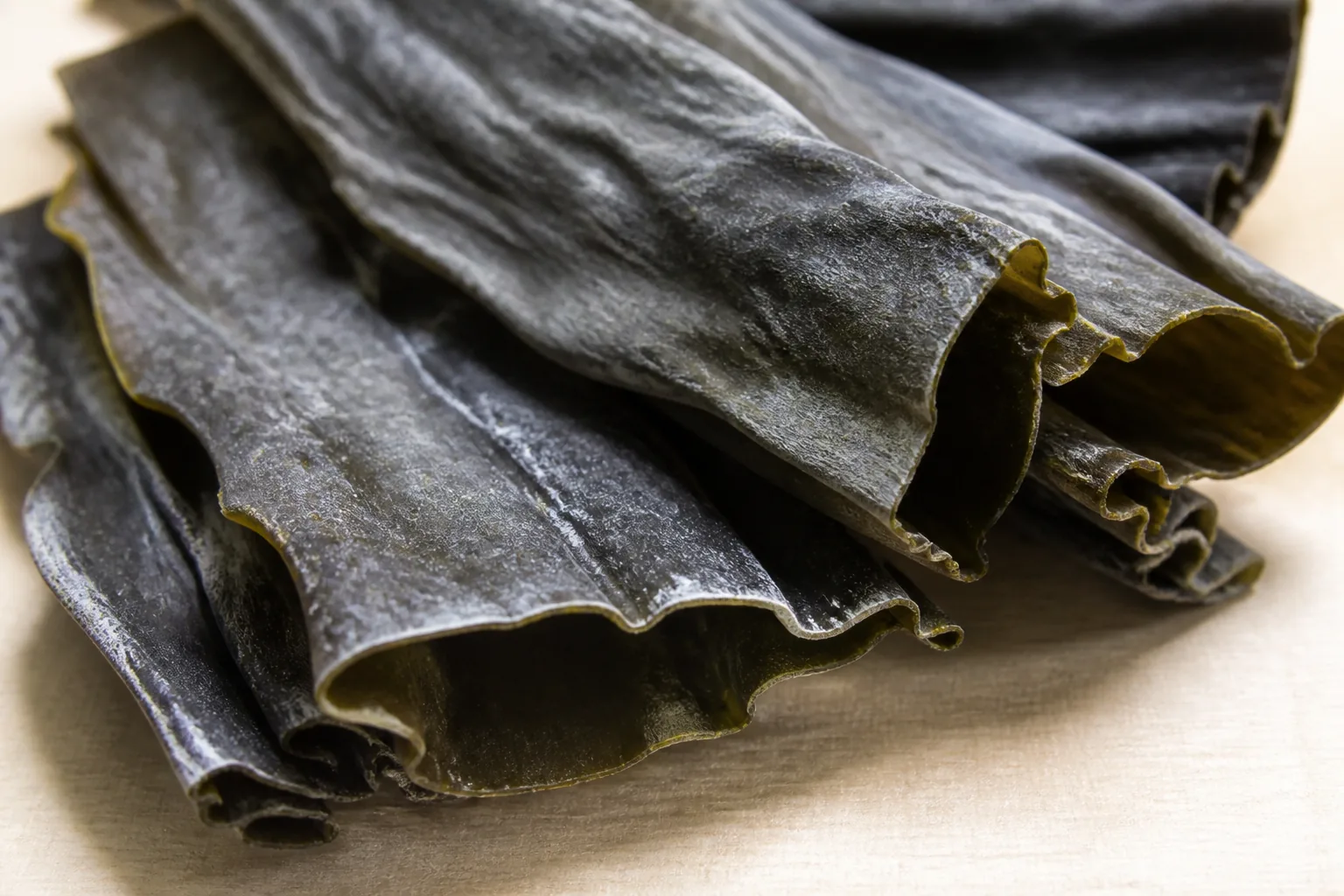
Why a single strip of kelp makes a pot of stock taste fuller and rounder, and the one rule that keeps it from turning slippery or bitter.
Read the guide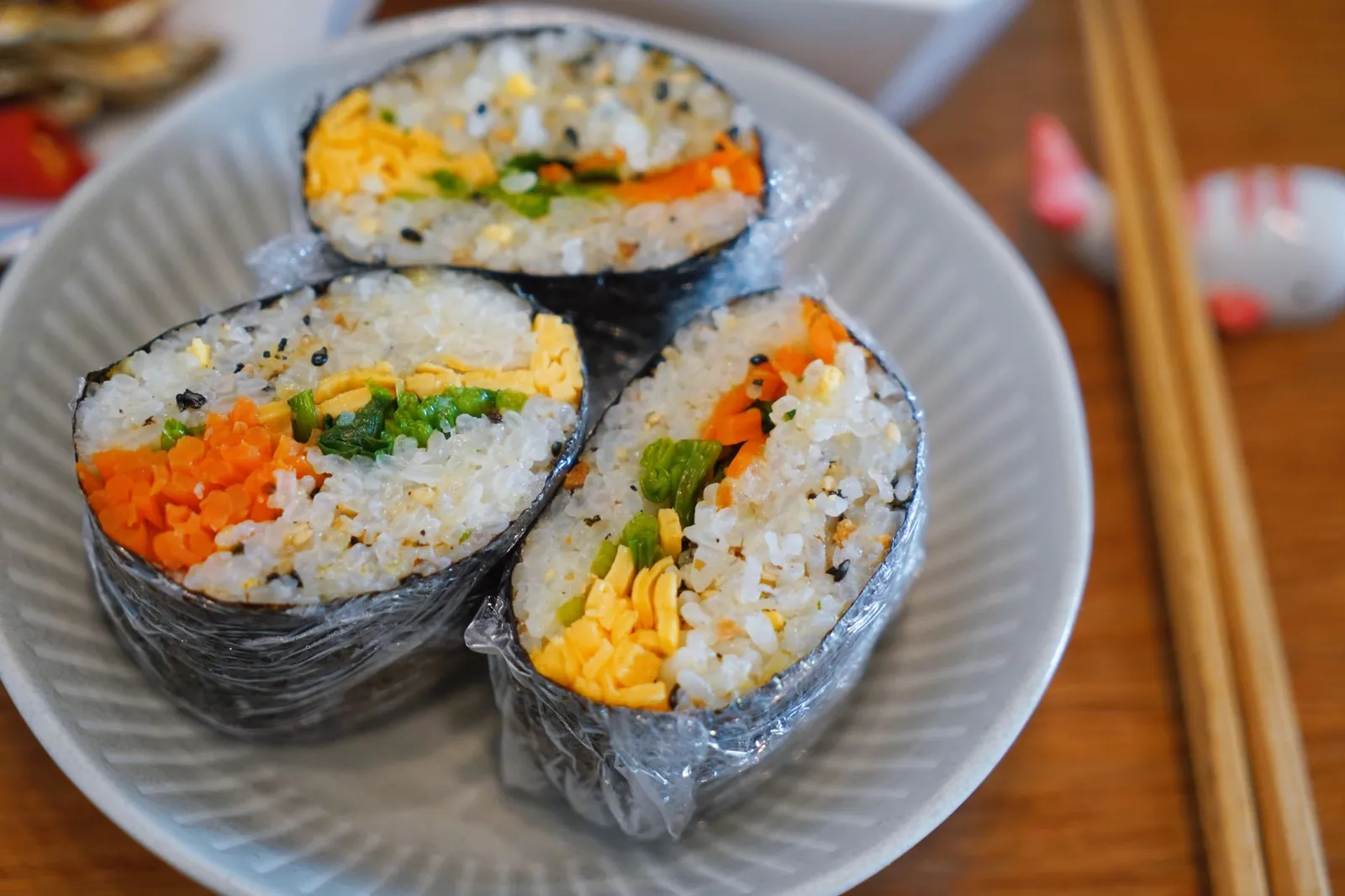
Torn over rice, crumbled into eggs, snipped onto soup — the small everyday uses for a sheet of nori once you stop saving it for rolls.
Read the guide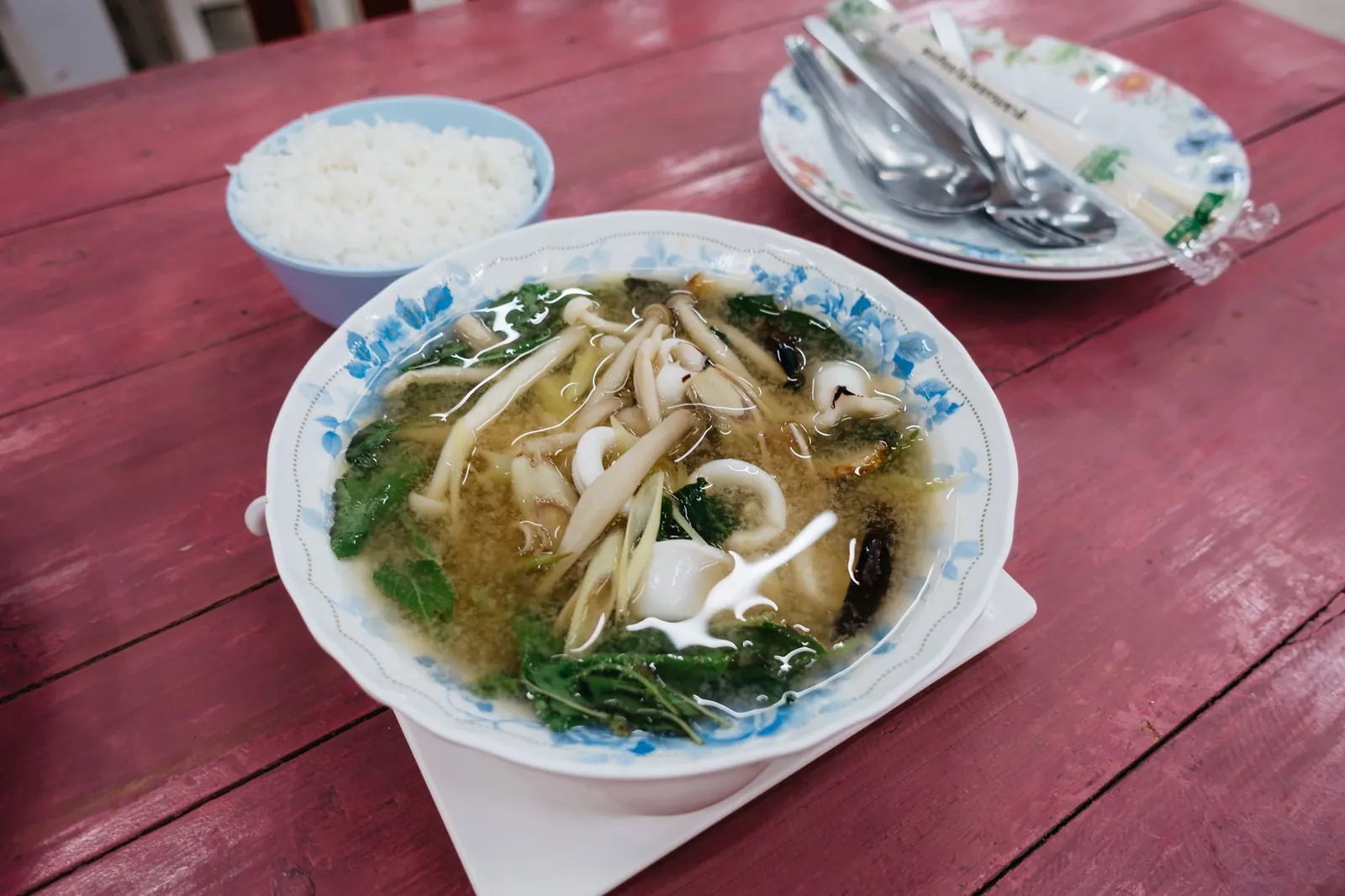
Where sea vegetables earn their place at the table — a spoonful of wakame in miso soup, a cool cucumber salad, and a few other easy wins.
Read the guide
An airtight jar, a dry cupboard and a little care keep seaweed crisp for a long time. How to store it well and know when it has faded.
Read the guideStart with small packets of two or three types rather than one big bag. Seaweed keeps well, but you learn faster by tasting the differences side by side.
Most dried sea vegetables just need cool water and a few minutes. Soak a pinch, taste it, and you will quickly get a feel for how far a small amount goes.
A jar with a tight lid, out of the light, is all it takes. Dry seaweed is at its best crisp; a soft, limp sheet has usually taken on kitchen damp.
“A strip of kelp in the pot asks for nothing and gives back a savory depth you would swear took hours.”The Sea Vegetable